
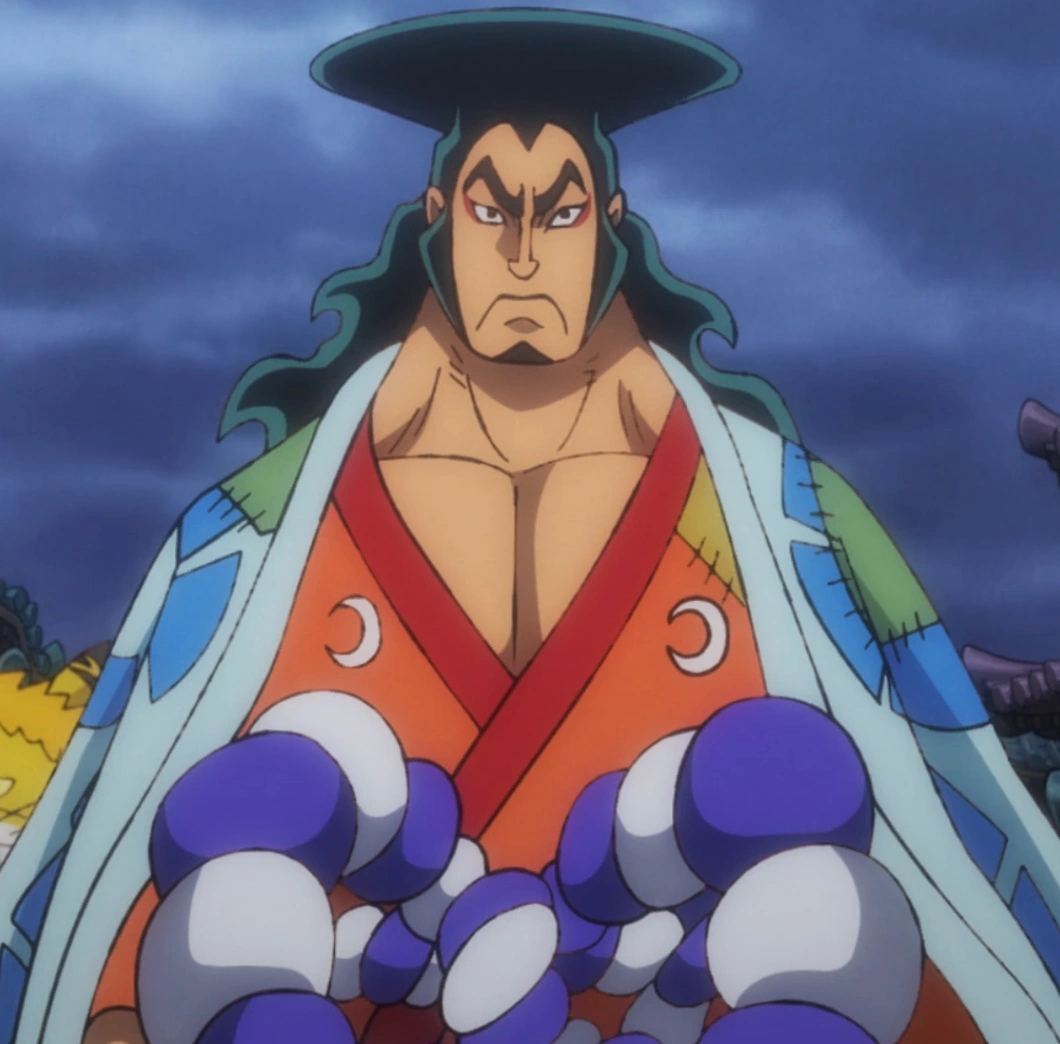
TL;DR: Kozuki Oden was the heir to Wano's ruling clan, a man so powerful and so chaotic that his own country exiled him before he could inherit it. He sailed with Whitebeard and then with Gol D. Roger, reaching Laugh Tale as one of the only people in the world who could read the Poneglyphs. He came home to find Wano occupied and spent years enduring public humiliation to try to protect the people there. Then he was executed — boiled alive — and held his retainers above the oil for one hour. The hour passed. Kaido shot him anyway. He died standing.
The Problem with Being Born Extraordinary
Oden's story is a tragedy in the classical sense: a man whose virtues are the source of his destruction.
He was born into the Kozuki clan, the family that created the Poneglyphs and carried the knowledge the World Government had spent 800 years suppressing. He was physically extraordinary — strong enough to split a river as a teenager, charismatic enough to gather followers everywhere he went, wild enough to cause chaos in Wano's capital on what seemed like a weekly basis.
Wano's rigid social hierarchy had no category for him. He didn't fit the role of a dutiful heir. He fought, he caused scenes, he genuinely couldn't understand why people followed rules that seemed to exist for their own sake. His father, Lord Kozuki Sukiyaki, had him exiled rather than watch him tear the capital apart.
So Oden went to sea.
Two Yonko, One Voyage
He stowed away on Whitebeard's ship. Whitebeard threw him off. Oden swam after the ship. Whitebeard threw him off again. This continued for three days until Whitebeard relented — he couldn't decide whether to be annoyed or impressed, and eventually the question became irrelevant because Oden had made himself impossible to ignore.
He served as a Whitebeard Pirate for years. He was good at it. He fought, he helped territories the crew protected, he formed genuine bonds. By the time Roger arrived and asked to borrow Oden specifically for one final voyage, Whitebeard agreed with obvious reluctance. Roger needed a Poneglyph reader. There was only one available who was willing to sail.
The final Roger voyage assembled all four Road Poneglyphs, located Laugh Tale, and found what Joy Boy had left behind. Roger cried. Then he laughed. He told his crew they were born in the wrong era — the person meant to reach this place hadn't been born yet.
Oden was present for all of it. He understood the Poneglyphs. He knew what was at Laugh Tale and what it meant.
Then he went home, because his father had died and Wano needed him.
What He Found When He Returned
Wano was already gone.
Kurozumi Orochi — a former low-level schemer with no genuine claim to power — had installed himself as shogun while Oden was away. He had done it with Kaido's backing. Kaido had planted his forces in Wano and was using it as an industrial base: SMILE factory production, weapons, the infrastructure for his army of artificial Zoan users.
Oden's people were starving and being worked to death. The ports were sealed. No one entered or left. The country that had exiled him was now a prison for everyone in it.
He immediately tried to fight. The first clash with Kaido went poorly — not because Oden couldn't fight, but because a trap ended it before the fight could be decided fairly. Kurozumi Higurashi disguised herself as Momonosuke (Oden's young son) to distract him at the critical moment. Oden stopped. Kaido hit him from behind. That was the end of the battle.
Five Years of Dancing
What followed is the detail that defines how the series treats Oden's character.
Kaido gave him a deal: dance naked in Wano's capital once a week for five years, and every week Kaido would free one town from forced labor. Five years of humiliation in exchange for five years of small, concrete relief for people who had no other options.
Oden took the deal.
He understood it was probably a trap. He understood that Wano — a culture of strict honor and social hierarchy — would see him as a clown. He endured it anyway, week after week, absorbing the mockery and the thrown garbage and the public contempt, because every week a town got its people back.
His retainers — the Nine Red Scabbards, the people who had followed him his entire life — watched this and didn't understand. They thought he had broken. They thought the Oden who had sailed with the Pirate King had been replaced by someone who had given up.
He hadn't broken. He was paying a price because no one else could afford to.
When the five years ended, Kaido announced he never had any intention of honoring the deal. Oden responded by attacking Onigashima with his retainers. They fought through the entire fortress. He reached Kaido. He fought him to a genuine standstill — one of the only people in history to injure Kaido in the way that left a permanent scar. Then the trap closed again.
The Execution
Oden was sentenced to be boiled alive in a massive pot of oil, along with his nine retainers, in public.
The deal on the execution was this: anyone who lasted an hour in the oil would be set free.
Oden held a wooden plank above the oil and balanced all nine of his retainers on it, above the surface, while he stood in it himself. His body absorbed what theirs didn't. He held that position for the full hour.
The crowd that had mocked him for five years watched and gradually went silent. By the forty-minute mark they were cheering for him. By the end they were begging the executioners to stop.
The hour passed. Oden asked Kaido to honor the agreement.
Kaido shot him.
Before Oden could climb out of the oil, Orochi gave the order and the execution was completed. His retainers escaped — his son Momonosuke and four others were sent forward in time twenty years by Toki's Devil Fruit, to arrive when the moment was right.
Oden's final act was not a speech or a final technique. He threw his retainers to safety. Then he sank into the oil.
The Marines recorded that he died laughing.
What He Knew
The Wano arc is structured around Oden's absence. Everything that happens — the twenty years of occupation, Momonosuke's arc, the Nine Red Scabbards' long wait — is a consequence of what Kaido did to one man in a pot of oil in 1502 (by the One Piece in-universe calendar).
But there's a layer beneath the tragedy. Oden knew things at Laugh Tale that almost no one else alive knows. He understood the Void Century, what Joy Boy promised, what the Ancient Kingdom was. He wrote that knowledge into the journal his retainers eventually find — the same journal that confirms, among other things, that the Will of D. is not just a coincidence.
He couldn't open Wano's borders in time. He couldn't stop Kaido before it was too late. But he understood what the world was moving toward and he chose the right side of it even when that side cost him everything.
Roger told him once that he couldn't understand the grief he felt about leaving Laugh Tale with something he couldn't use. Oden understood exactly. He went home knowing the era wasn't ready yet. He spent the rest of his life trying to hold space for the era that would be.
The Scar
Oden's sword technique was called Togen Totsuka — a dual-blade style he called Two-Sword Style: Paradise Waterfall. At full strength he was capable of injuring Kaido badly enough to leave a permanent scar, which by the Wano arc is the single most visible physical evidence that Kaido can be hurt.
Kaido acknowledged it. At several points during the Wano arc, he specifically referenced Oden as the only person who had genuinely threatened him. The scar is a constant reminder that someone came close, and that the people who inherited Oden's legacy might come closer.
Zoro's goal throughout Wano is to cut Kaido in the same place — to prove that the current generation has reached Oden's level. He doesn't quite get there. But the target was always Oden's scar.
His Legacy
Momonosuke inherits everything: the clan, the duty, the dragon fruit that accidentally replicated Kaido's, and the burden of being his father's son in a country that barely remembers what his father actually was.
The Nine Red Scabbards spent twenty years keeping the flame alive. When Momonosuke finally arrives from the future, they have to explain to a child who his father was — not the public humiliation version Wano remembers, but the man who stood in boiling oil for an hour holding his people above the surface.
Oden's journal survives. Robin eventually accesses the information he preserved about Laugh Tale and the Poneglyphs. What he learned and chose to record became one of the paths toward the truth the World Government spent centuries trying to erase.
He died twenty years before the main story begins. His presence in it is everywhere.
FAQ
Did Kozuki Oden reach Laugh Tale? Yes. He sailed with Roger's crew on the final voyage and was present when they found the One Piece. He could read Poneglyphs — the script his own clan created — which made him essential to deciphering the Road Poneglyphs. He is one of only a handful of people in history who knows what's on Laugh Tale.
Why did Oden dance naked in the streets? Kaido gave him a deal: dance every week for five years and Kaido would free the towns he was oppressing. Oden endured years of public humiliation because people's lives were at stake. Kaido never intended to honor the deal.
How did Oden die? He was executed by boiling in a massive pot of oil with his nine retainers. He held all nine of them above the oil on a wooden plank for one hour — the deal being that anyone who lasted an hour would go free. He lasted the full hour. Kaido shot him before he could climb out. His retainers escaped. He died standing.
Who are the Nine Red Scabbards? Oden's nine closest retainers: Kin'emon, Denjiro, Ashura Doji, Inuarashi, Nekomamushi, Kawamatsu, Izou, Raizo, and Kiku. They fought beside him his entire life, survived the execution, and spent twenty years waiting to avenge him. Momonosuke is his son.
Was Oden stronger than Kaido? At full strength and without interference, possibly close to equal. Their duel during the execution attempt was described as an almost-even fight — Oden landed the cut that scarred Kaido permanently. The fight ended because Kurozumi Higurashi distracted him. A clean fight might have gone differently.
